
Early Intervention Therapy in Dubai
Support for Babies, Toddlers & Young Children — Because the Earliest Years Matter Most
If something about your child’s development is on your mind — words that haven’t come yet, milestones that feel late, a gut feeling you can’t shake — you don’t have to wait and see.
At Starwalkers — a pediatric therapy clinic in Dubai Healthcare City — our early intervention team supports babies, toddlers, and young children with communication, play, movement, sensory, and feeding development, always through connection and always with you at the centre.
Early support is not about fixing a child. It is about building strong foundations during the years when the brain is growing fastest — and giving you the confidence and tools to support your child every day.
Who Can Benefit?
Early intervention may benefit your child if they:
Milestones Worth a Conversation
Every child develops at their own pace, and single milestones rarely tell the whole story. But some signs are worth a conversation rather than a wait:
- Little or no babbling
- Not responding consistently to their name
- Few gestures — no pointing, waving, or showing
- Limited back-and-forth smiles and sounds
- Not yet sitting steadily
- Few or no single words
- Not pointing to show you interesting things
- Limited pretend play emerging
- Not yet walking
- Very restricted range of accepted foods
- Fewer than 50 words
- No two-word combinations
- Hard to engage in simple shared games
- Losing words or skills previously used
- Frequent, intense difficulty with regulation
- Speech mostly unclear to unfamiliar listeners
- Not combining words into short sentences
- Little interest in other children
- Play remains very repetitive or restricted
- Big struggles with everyday transitions
This is a guide for starting a conversation — not a checklist for a diagnosis. If your child shows some of these signs, it means a closer look is worthwhile. And if nothing is on this list but your instinct says something is different, that instinct counts too.
Why the Early Years Matter
In the first years of life, the brain builds connections faster than at any other time. Support during this window doesn’t need to be intensive or clinical — small, well-chosen strategies woven into daily routines can shift a child’s whole developmental path.
Early intervention also supports you. Most parents arrive worried and unsure; they leave knowing how their child communicates, plays, and regulates — and exactly what to do about it. Confident, informed parents are the single most powerful early intervention there is.
A “wait and see” approach costs more than a check ever will.
Our Areas of Support
Developmental Assessment
A whole-child look at communication, play, motor skills, sensory processing, feeding, and regulation — so you get answers, not just observations.
Early Communication
Building connection, gestures, joint attention, and first language — including support for gestalt language processors and early AAC where helpful.
Play & Interaction Coaching
Parent-mediated support that turns everyday play into the richest language and connection opportunities your child has.
Early Motor & Sensory Foundations
Occupational therapy support for movement milestones, sensory regulation, and the body-based foundations of learning.
Early Feeding Support
Responsive, pressure-free help with transitioning to solids, extreme picky eating, and mealtime stress in the toddler years.
Nursery & School Transitions
Preparing your child — and their nursery or school — for successful, supported transitions into education.
Our Assessment Process
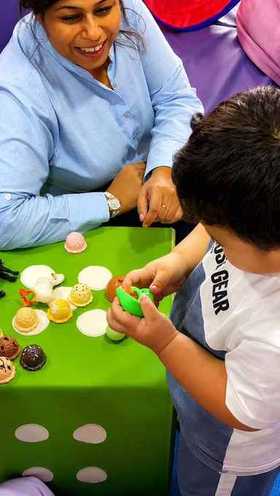
Early intervention assessments are play-based and relaxed — your child will experience it as playtime with a new friend.
Assessment may include:
- Detailed parent interview and developmental history
- Observation of play, communication, and interaction
- Motor, sensory, and regulation observations
- Feeding and mealtime history where relevant
- Language processing style, including gestalt language processing
- Standardised assessments when appropriate and clinically indicated
- Collaborative goal setting with families
Following the assessment, families receive:
- A clear picture of your child’s developmental profile
- Honest answers to the questions that brought you in
- An individualised plan built around your family’s routines
- Practical strategies you can start using the same day
- Guidance on diagnostic pathways, if and when relevant
Evidence-Informed, Neurodiversity-Affirming Approaches We Use
Every strategy is selected according to your child’s individual profile, developmental stage, regulation, and family goals. Our therapists may draw from:
Every approach is adapted to the child — not the other way around.
Frequently Asked Questions
What is early intervention?
Early intervention is therapy and family support for babies, toddlers, and young children whose development is delayed or different — in communication, play, movement, sensory processing, or feeding. It works through the child’s natural routines and relationships, with parents coached as the most important people in the process.
Is my child too young for an assessment?
No. There is no minimum age for developmental support. The earliest years are when the brain is most adaptable, and support at this stage often means smaller, gentler input with bigger long-term impact.
Should I wait and see if my child catches up?
“Wait and see” is the advice most parents regret. If your child catches up on their own, an assessment costs you one appointment and buys peace of mind. If they need support, you have gained months of the most valuable developmental time. Either way, checking wins.
My child is not talking yet. When should I be concerned?
As a guide: few or no words by 18 months, no two-word combinations by age 2, or losing words they previously used are all reasons to book a conversation. But you do not need to hit a red flag to come in — parent concern alone is one of the most reliable indicators in child development.
Does needing early intervention mean something is wrong with my child?
No. It means your child develops differently or at a different pace, and the adults around them are choosing to understand and support that early. We are neurodiversity-affirming: our goal is never to make a child “normal” — it is to help them connect, communicate, and thrive as themselves.
Do you diagnose autism or other conditions?
We are a therapy clinic, so we do not issue medical diagnoses. We assess development in depth, support your child from day one, and — where a diagnostic assessment would help — guide you to trusted diagnostic pathways in Dubai while therapy continues.
What happens in an early intervention session?
Play. To your child it looks like games on the floor with someone who follows their interests. Underneath, every activity targets communication, motor, sensory, or regulation goals — and you are coached throughout so the progress continues at home.
What is the parent’s role in early intervention?
Central. Your child spends a few hours a week with us and every waking hour with you. We coach you in strategies that fit your real routines — mealtimes, bath time, the car ride to nursery — because that is where development actually happens.
My child was born premature or has Down syndrome. Do you support them?
Yes. We support children with prematurity, Down syndrome and other genetic conditions, autism, ADHD, speech and language delays, motor delays, sensory differences, and feeding difficulties — with a plan built around your individual child.
Do you offer early intervention online?
Yes. Alongside in-clinic sessions at Dubai Healthcare City, we offer online parent coaching for families across the UAE and internationally — which works particularly well for early intervention, where parents deliver most of the input.
Where is your clinic located?
We are in Dubai Healthcare City: 214-C, 2nd floor, Block B, Al Razi Medical Complex (Building 64).
How much does early intervention cost in Dubai?
Fees depend on the assessment and the plan your child needs. Call or WhatsApp us at +971 56 448 1678 and we will walk you through the options.
Parent guides
Straight answers to the questions parents in Dubai ask us most.
- My 2-year-old isn’t talking yet. Should I worry?
- My child doesn’t respond to their name
- Early signs of autism in toddlers
- Speech delay or autism? How to tell the difference
- My child repeats TV lines and everything I say
- Does my child need occupational therapy?
- Covers ears, walks on tiptoes, hates clothes tags
- My child only eats five foods
- Is it ADHD or is my child just active?
- How to get an autism diagnosis in Dubai
- How much does speech therapy cost in Dubai?
- Affordable speech therapy in Dubai (AED 150–199 a session)
- Speech therapy in Dubai: 10 clinics compared
Ready to Begin?
You know your child best. If something feels off, that feeling deserves answers — not a waiting list.
Book an early intervention assessment today and get clarity, direction, and a plan.
Hours: Monday–Saturday, 9:00 AM – 6:00 PM