
Sensory Integration Therapy in Dubai
Ayres Sensory Integration®-Informed & Reflex Integration Support for Children
Does your child cover their ears at everyday sounds, avoid messy play, crash into furniture, or seem to be in constant motion? Sensory differences are real, physical, and deeply connected to how children move, feel, learn, and regulate.
At Starwalkers — a pediatric therapy clinic in Dubai Healthcare City — our dedicated Sensory Integration program goes deeper than general occupational therapy. We combine Ayres Sensory Integration®-informed practice with reflex integration support to address the foundations underneath attention, coordination, regulation, and participation.
We never aim to suppress sensory responses. We help children understand their bodies, build regulation, and participate in life on their own terms.
Who Can Benefit?
Sensory integration therapy may benefit children who:
The Eight Senses We Assess
Most people know five senses. Sensory integration works with eight — including the three hidden senses that drive regulation, movement, and self-awareness.
Sight (Visual)
Processing light, colour, movement, and visual detail — and staying regulated in visually busy places.
Hearing (Auditory)
Filtering background noise, tolerating unexpected sounds, and making sense of what is heard.
Touch (Tactile)
Interpreting textures, light touch, and deep pressure — from clothing tags to messy play.
Taste (Gustatory)
Processing flavours and food textures — closely tied to feeding and mealtime differences.
Smell (Olfactory)
Responding to everyday scents, which can calm, alert, or overwhelm.
Vestibular
The movement and balance sense — how the body knows it is moving, tilting, or still.
Proprioception
The body-position sense — knowing where your limbs are without looking, and grading force.
Interoception
The internal sense — noticing hunger, thirst, a full bladder, a racing heart, and emotions.
Our Areas of Support
Sensory Modulation & Regulation
Helping children whose nervous systems over- or under-respond to input find regulation through the right sensory experiences, strategies, and environmental adaptations.
Reflex Integration
Assessing and supporting retained primitive reflexes that affect posture, coordination, attention, and regulation through targeted movement activities.
Motor Planning & Praxis
Building the ability to imagine, sequence, and carry out new movements — the foundation of learning every new physical skill.
Postural Control & Bilateral Coordination
Developing the core stability, balance, and two-sided coordination that underpin sitting at a desk, sports, and handwriting.
Interoception & Body Awareness
Helping children notice and understand their internal signals — the foundation of toileting, emotional awareness, and self-regulation.
Sensory-Based Feeding Links
Working hand-in-hand with our feeding team when sensory differences show up most strongly at the dinner table.
How This Differs From General Occupational Therapy
Our occupational therapy program supports everyday skills — self-care, handwriting, motor development, school participation. Our Sensory Integration program is a specialised, deeper stream for children whose sensory processing and reflex foundations are the main barrier.
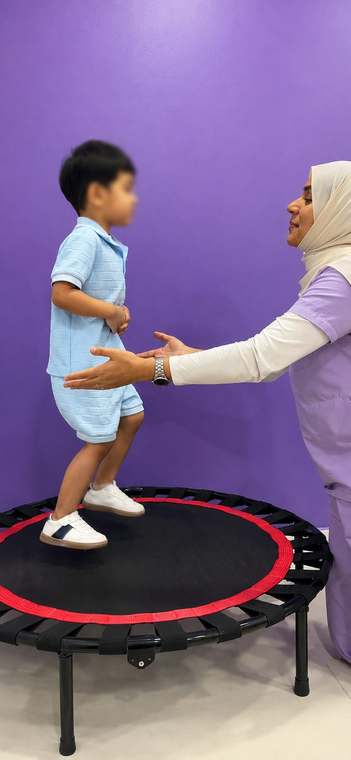
Sessions happen in a sensory-rich environment with suspended equipment and carefully graded sensory experiences, delivered by therapists trained in Ayres Sensory Integration®-informed practice and reflex integration. Many children receive both — the two programs share one plan and one team.
Our Assessment Process
Every assessment begins by getting to know the child — not just their challenges, but who they are.
They may include:
- Detailed parent interview and sensory history
- Structured observation of play, movement, and regulation
- Sensory profile across all eight senses
- Primitive reflex screening
- Motor planning, balance, and coordination observations
- Interoception and regulation observations
- Standardised assessments when appropriate and clinically indicated
- Collaborative goal setting with families
Following the assessment, families receive:
- A clear map of your child’s sensory profile
- An explanation of how sensory differences connect to daily challenges
- Individualised therapy recommendations
- Practical sensory strategies for home and school
- Environmental adaptations tailored to your child
Evidence-Informed, Neurodiversity-Affirming Approaches We Use
Every strategy is selected according to your child’s individual sensory profile, motor development, regulation, and family goals. Our therapists may draw from:
Every approach is adapted to the child — not the other way around.
Frequently Asked Questions
What is sensory integration therapy?
Sensory integration therapy helps children whose brains process sensory information differently — sounds, touch, movement, and body signals. Through purposeful, play-based sensory experiences, therapy supports regulation, motor skills, attention, and participation in everyday life.
What are the signs of sensory processing differences?
Common signs include strong reactions to sounds, textures, or lights; avoiding messy play or certain clothing; constant movement or crashing into things; clumsiness; difficulty settling or transitioning; and big emotional responses that seem to come from nowhere. Every child’s profile is different.
What is the difference between sensory seeking and sensory avoiding?
Sensory seekers crave input — movement, deep pressure, loud play. Sensory avoiders are overwhelmed by input and withdraw from it. Many children are both, in different senses. An assessment maps your child’s unique profile across all eight senses.
What are the eight senses?
Beyond sight, hearing, touch, taste, and smell, we all have three internal senses: vestibular (movement and balance), proprioception (body position), and interoception (internal signals like hunger, thirst, and emotions). Differences in these hidden senses often explain what looks like behaviour.
What is reflex integration?
Primitive reflexes are automatic movement patterns from infancy that normally fade as the brain matures. When they remain active, they can affect posture, coordination, attention, and regulation. Reflex integration uses specific movement activities to help the body mature past these patterns.
How is this different from regular occupational therapy?
General OT covers everyday skills — handwriting, self-care, motor development. Our sensory integration program is a deeper, specialised stream focusing on the sensory and reflex foundations underneath those skills, delivered by therapists trained in Ayres Sensory Integration®-informed and reflex integration approaches.
Is sensory integration therapy evidence-based?
Ayres Sensory Integration® is one of the most researched approaches in pediatric occupational therapy, with a growing evidence base for improving individualised goals in children with sensory differences. We use it as part of an evidence-informed, individualised plan — never as a one-size-fits-all program.
My child is autistic. Is sensory integration right for them?
Many autistic children have significant sensory differences, and sensory support is often one of the most helpful therapies for regulation and participation. Our approach is neurodiversity-affirming: we honour sensory needs and never try to train children out of their sensory responses.
What does a sensory integration session look like?
Purposeful play: swings, climbing, crash mats, obstacle courses, tactile play — carefully selected to give your child’s nervous system the input it needs. To your child it feels like play; to your therapist, every activity has a goal.
Can sensory differences affect eating and feeding?
Yes, strongly. Many picky eaters are responding to the sensory properties of food — texture, smell, appearance. Our sensory and feeding teams work together when feeding is part of the picture.
Where is your clinic located?
We are in Dubai Healthcare City: 214-C, 2nd floor, Block B, Al Razi Medical Complex (Building 64).
How much does sensory integration therapy cost in Dubai?
Fees depend on the assessment and therapy plan your child needs. Call or WhatsApp us at +971 56 448 1678 and we will walk you through the options.
Parent guides
Straight answers to the questions parents in Dubai ask us most.
- My 2-year-old isn’t talking yet. Should I worry?
- My child doesn’t respond to their name
- Early signs of autism in toddlers
- Speech delay or autism? How to tell the difference
- My child repeats TV lines and everything I say
- Does my child need occupational therapy?
- Covers ears, walks on tiptoes, hates clothes tags
- My child only eats five foods
- Is it ADHD or is my child just active?
- How to get an autism diagnosis in Dubai
- How much does speech therapy cost in Dubai?
- Affordable speech therapy in Dubai (AED 150–199 a session)
- Speech therapy in Dubai: 10 clinics compared
Ready to Begin?
Sensory differences are not misbehaviour — they are information. The right support starts by listening to what your child’s body is telling us.
Book a sensory integration assessment today and get a clear picture of your child’s sensory world.
Hours: Monday–Saturday, 9:00 AM – 6:00 PM
Who provides sensory integration therapy at Starwalkers
Sensory integration-informed occupational therapy at Starwalkers Clinic is provided by Senior Occupational Therapist Runjhun Joshi, DHA-licensed, under the clinical direction of founder Nazma Sheikh. Every child starts with a sensory profile and regulation assessment, and therapy supports the child’s sensory needs rather than trying to suppress them.
Starwalkers Clinic is a DHA-licensed paediatric clinic in Dubai Healthcare City (Al Razi Medical Complex, Building 64) offering sensory integration therapy and occupational therapy for children with sensory processing differences, autism, ADHD, dyspraxia and feeding challenges. Therapy is child-led and neurodiversity-affirming and does not use ABA. Sessions cost AED 150–199, or AED 1,999 for a 10-session package, in clinic seven days a week.
Related: occupational therapy for children in Dubai, covers ears, walks on tiptoes, hates clothes tags, picky eater or feeding problem.